A hot air balloon safari gives you a completely different way to experience the Masai Mara or Serengeti. After spending several days on game drives, you get used to seeing the wilderness from the vehicle. You follow animal tracks, stop beside lions, watch elephants cross the road, and drive towards herds of wildebeest stretching across the plains. Then one morning, you see the same landscape from the air.
As the balloon rises above the plains, the landscape starts to make sense differently. Rivers curve through the grasslands, woodland patches stand out against the open plains, and herds that seemed enormous from the ground become part of a much larger movement across the ecosystem. This is what makes a balloon safari special. It does not replace a game drive. It gives you a view that a game drive cannot provide.
The experience normally starts before sunrise. You leave your camp while it is still dark, reach the launch area, and watch the balloon being prepared before climbing into the basket. As the first light reaches the horizon, the balloon lifts quietly above the plains. From up there, there are no roads to follow and no vehicle in front of you. You drift with the wind, looking down across the landscape and watching wildlife from a completely different perspective.
For many travellers, the balloon flight becomes one of the most memorable mornings of the safari. But it is also an experience worth planning properly. You will probably want to know whether it is worth the extra cost, how early you need to wake up, how many people share the basket, what happens when the balloon lands, and whether you can take good wildlife photographs from the air.
You may also be deciding between the Masai Mara and Serengeti, wondering which gives you the better balloon experience. Weather is another important factor because flights depend on suitable flying conditions and may need to be changed when conditions are not right. This guide takes you through those practical details so you know exactly what to expect before adding a hot air balloon safari to your East African adventure.
Is a Hot Air Balloon Safari Worth It in East Africa?
If you are spending three or more nights in the Masai Mara or Serengeti and the extra cost is comfortable for your budget, we think a hot air balloon safari is well worth considering. The biggest difference is the view. From a safari vehicle, you are down at ground level, close to the animals. You can sit beside a pride of lions, wait for a leopard to come out of the grass, or spend time watching an elephant family at the water. A balloon gives you something completely different.
You are looking at the whole landscape. As the balloon drifts across the plains, you can see rivers winding through the grasslands, game trails cutting across the open country, woodland patches, and herds moving between different habitats. You begin to understand just how large the ecosystem is and how much ground the animals cover each day. But there is an important trade-off. The balloon goes where the wind takes it. If your guide spots a cheetah from the vehicle, you cannot simply ask the balloon pilot to turn around and follow it. You also cannot hover over one animal or stop whenever you want.
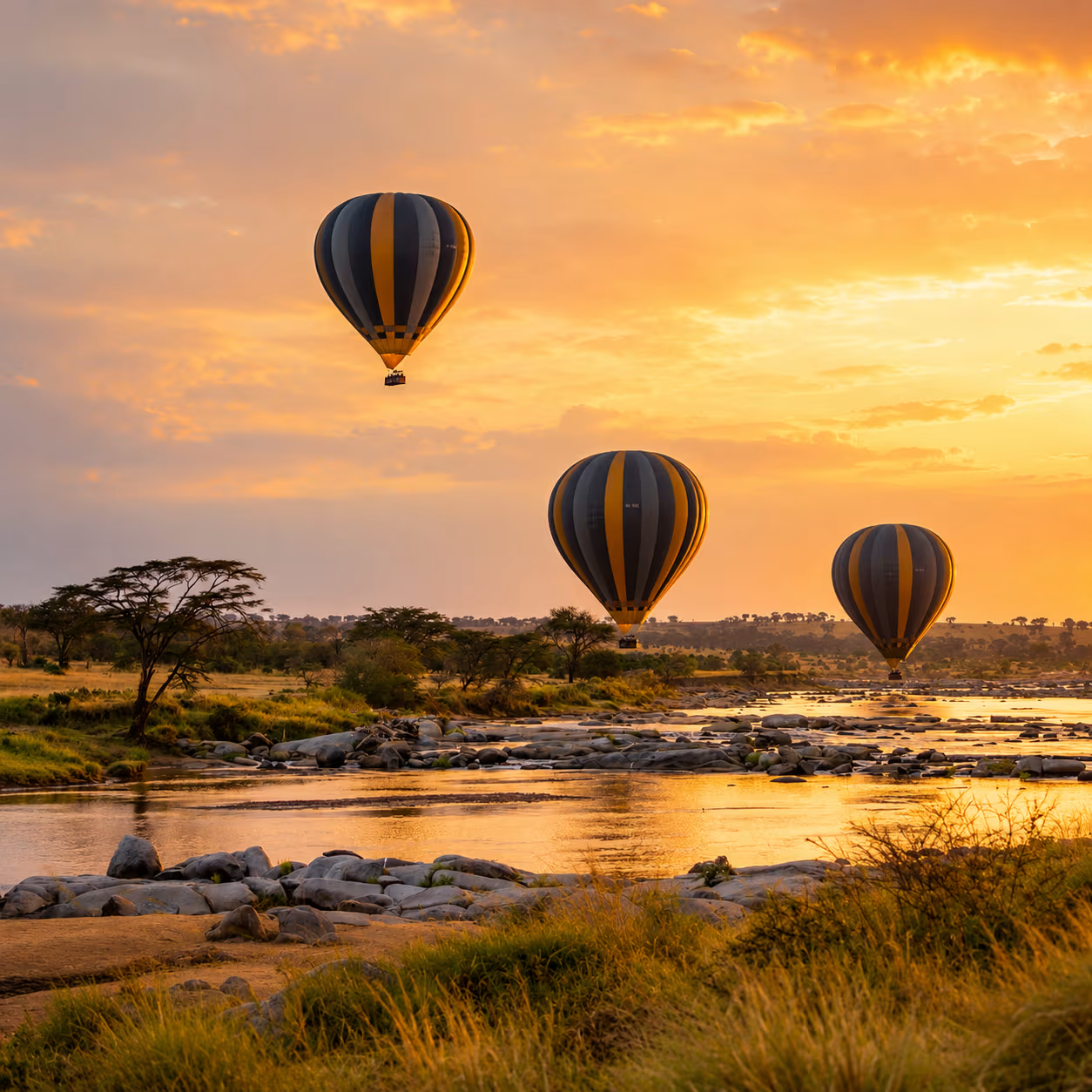
That is why we would never use a balloon safari as a replacement for your game drives. The two experiences work best together. Your vehicle gets you close to the wildlife, while the balloon gives you a completely different view of the land they live in. The morning itself is part of the experience. You leave before sunrise and reach the launch area while it is still dark. As the balloon is prepared, the plains slowly begin to brighten. Once you are in the air, the morning becomes remarkably quiet, broken only now and then by the sound of the burner.
After the flight, you normally come back down and enjoy breakfast in the bush before continuing with your day. If you only have a day or two in the Mara or Serengeti, we would prioritise your game drives. There is too much to see on the ground to give up one of your limited safari mornings. With three nights or more, however, it becomes much easier to fit in a balloon flight without taking too much away from the main wildlife experience. If you have the time and the budget, it is one of those safari experiences that gives you a completely different appreciation of East Africa’s landscapes.
Masai Mara vs Serengeti Hot Air Balloon Safaris
Both the Masai Mara and Serengeti give you that unforgettable balloon experience: you leave camp before dawn, watch the landscape brighten as the sun comes up, then drift quietly above the plains for about an hour. Once you land, the experience continues with a sparkling-wine toast and a bush breakfast out in the wilderness. The real difference comes when you look down. In the Masai Mara, the balloon flight takes you over open grasslands where wildlife is often spread across the Mara ecosystem.
In the Serengeti, the scenery and wildlife below can change dramatically with the seasons, particularly as large herds move across the plains in search of fresh grazing. So, while the balloon experience itself follows much the same rhythm in both destinations, the landscape beneath you can make the two flights feel quite different. Your choice really comes down to which destination fits your safari, the time of year you are travelling, and where the wildlife is likely to be concentrated during your stay.
Best Places for Hot Air Balloon Safaris in East Africa
Masai Mara Hot Air Balloon Safari, Kenya
The Masai Mara National Reserve is one of the best places in East Africa to experience a hot air balloon safari. Take off just before sunrise and watch the Mara slowly come to life beneath you as the first light spreads across the grasslands. The landscape is especially beautiful from the air. Instead of seeing one stretch of open savannah from a game-drive vehicle, you can look across rolling grasslands, pockets of riverine woodland and the winding river systems that run through the reserve and surrounding conservancies. Depending on where you take off and which way the wind carries the balloon, you may also get views of the Mara River below.
The experience becomes even more special during the July to October migration season, when wildebeest and zebra move through the wider Mara ecosystem in large numbers. From the ground, you might follow one herd along a particular track. From above, you can see how the animals spread across the landscape, sometimes forming long lines or large concentrations across the plains. One thing to keep in mind is that a balloon safari does not guarantee a view of a wildebeest river crossing. The balloon cannot be steered like a helicopter. It moves with the wind, so your route depends on the conditions that morning, while the animals make their own decisions about when and where to cross.
That uncertainty is part of what makes the experience exciting. You are not following a fixed route. You are floating quietly above the Mara, watching the landscape and wildlife from a completely different angle. Balloon flights normally begin around sunrise and operate throughout the year when weather conditions are suitable. Your morning starts well before take-off, with an early pickup from your camp or lodge and a drive to the launch area. Pickup time depends on where you are staying and how far it is from the launch site.
Serengeti Hot Air Balloon Safari, Tanzania
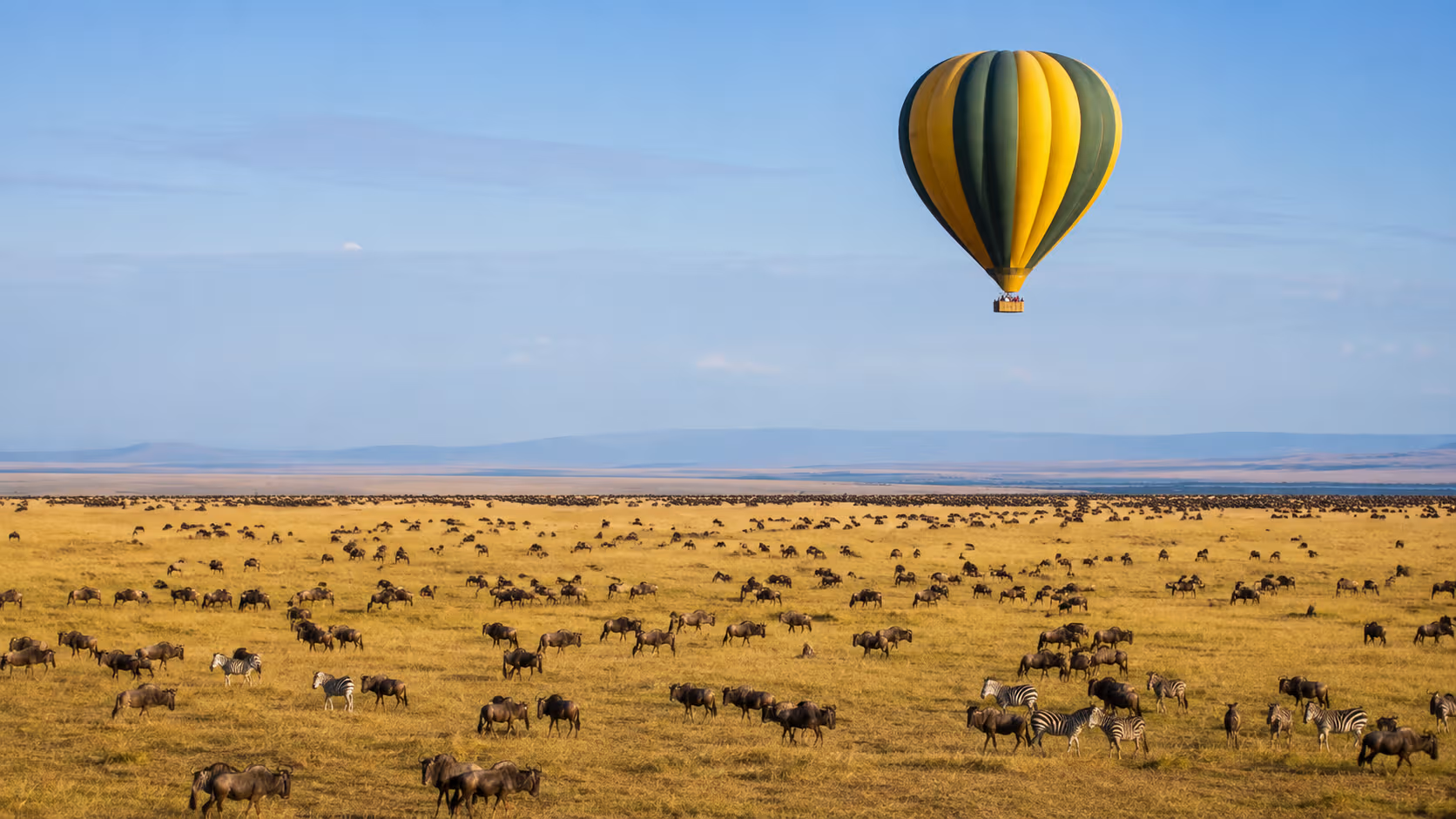
If the Masai Mara gives you a close look at the migration landscape, the Serengeti National Park gives you a real sense of how vast the ecosystem is. The plains seem enormous when you are driving through them, but the view from a balloon puts that scale into perspective. As the balloon rises, you can look across seemingly endless grasslands, scattered trees, rocky outcrops and winding drainage lines while wildlife moves below. You may see herds of wildebeest and zebra, giraffes, elephants, antelope and other animals spread across the plains, although exactly what you see depends on the season, location and flight path.
The experience changes with the migration. Around the southern Serengeti and Ndutu plains from January to March, large numbers of wildebeest gather in the short-grass plains, with many calves being born during this period. Later in the year, the herds move northwards, bringing the migration into the northern Serengeti and towards the Mara River around July to October. This makes the timing of your balloon safari important. You want to be in the part of the Serengeti where the wildlife is moving at the time of your visit, rather than simply choosing a flight because it is available. Even then, there is no guarantee that the balloon will pass directly over a particular herd. The pilot works with the wind and the conditions on the morning, so every flight follows its own route
When everything comes together, however, the view is extraordinary. You can watch thousands of animals spread across the plains while the balloon drifts silently above them. It is one of those safari experiences where you suddenly understand just how much land the Serengeti covers and why it is possible to drive for hours without reaching the end of the wildlife-rich landscape. Balloon safaris operate in parts of the Serengeti throughout the year, with some areas becoming particularly attractive during the migration seasons. The exact availability depends on the location and time of year, so it is worth choosing your flight area around your wider safari itinerary.
When Is the Best Time for a Hot Air Balloon Safari?
Balloon safaris operate year-round at both the Masai Mara and Serengeti, subject to weather. The flights are scheduled daily in the dry season and during peak migration periods, with some cancellations during the rainy season when low cloud and strong winds make flying unsafe. A cancellation is rare but does happen, and most operators offer a full refund or rebooking if weather prevents a flight.
The best time to do a balloon safari is not dictated by the balloon experience itself, which is similarly atmospheric in any clear weather, but by what’s below the basket at the time of the flight. A calving season flight over the southern Serengeti from January through March, with hundreds of thousands of animals on the plains below, is visually different from a green season flight in April over a beautiful but largely empty landscape.
A peak crossing season flight over the northern Serengeti or the Masai Mara from July through October may include views of animals massing near the river. Outside these specific migration windows, the year-round resident wildlife of the Seronera area or the Mara’s open plains still produces interesting aerial wildlife viewing, just at lower density.
What Happens on a Hot Air Balloon Safari?
A hot air balloon safari starts long before the sun comes up. If you have never done one before, the early start can feel surprisingly early, but that is part of the experience. You are heading out while the Mara or Serengeti is still dark, getting into position before the first light reaches the plains.
Pre-Dawn Pickup and Transfer to the Launch Site
Your camp or balloon operator will collect you and drive you to the launch site. The exact pickup time depends on where you are staying, the launch site being used, and the time of year. If your camp is some distance away, you may be picked up from around 4:00 am, while guests staying closer to the launch area can leave later. The important thing is to confirm your pickup time the evening before. Have your clothes ready, charge your camera, and get some sleep. A “sunrise flight” does not mean you wake up at sunrise. You need to be at the launch site before the sun appears.
Watching the Balloon Take Shape
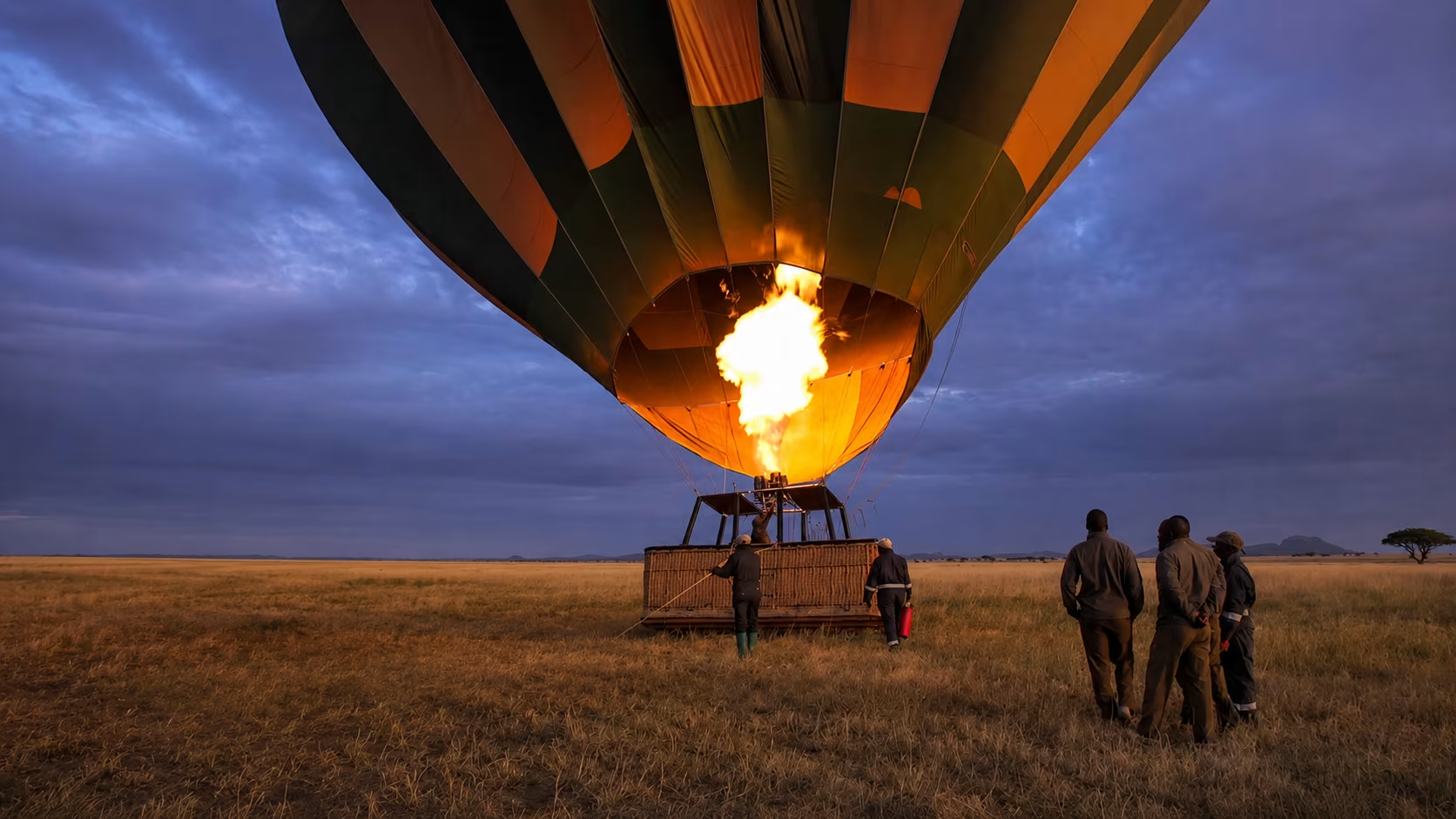
When you arrive, the balloon will still be on the ground, and the crew will already be preparing for take-off. The huge envelope is spread out across the ground before powerful fans push air inside. The burners then roar into life, heating the air until the balloon slowly rises above you. This is one of the most enjoyable parts of the morning because you get to watch the aircraft come to life rather than simply arriving to find it ready to fly. Before boarding, the pilot also takes you through the safety instructions and explains what to expect during take-off, the flight and landing.
Getting Into the Balloon Basket
Getting into the basket is straightforward, but you do need to follow the crew’s instructions carefully. Depending on the basket and launch procedure, passengers may board while the basket is still on its side before it is brought upright. You should be comfortable standing for the duration of the flight and able to get into the required landing position when the pilot gives the instruction. If you are travelling with children, check the age requirements with your chosen balloon operator before booking, as the minimum age is not the same everywhere.
The Sunrise Flight
Once the balloon lifts away from the ground, the feeling changes completely. The burner makes a loud burst whenever the pilot adds heat, but between those bursts the balloon is remarkably quiet. There is no engine running continuously beneath you and no safari vehicle bouncing along a track. You simply drift with the morning air while the plains slowly wake up below. The pilot controls the balloon’s altitude and makes use of different wind layers where conditions allow, but a balloon cannot be steered like an aeroplane. The wind plays a major part in determining your route, which is why every flight has its own character.
A typical Mara or Serengeti balloon flight lasts about an hour, although the actual flying time depends on the weather and operating conditions. The altitude also changes during the flight. At lower levels, you can pick out animals and details on the ground more easily. As the balloon rises, the view opens up and you begin to appreciate just how enormous the surrounding landscape is. You may look down on herds moving across the plains, spot wildlife near a river or watch the shadows of the balloon travel across the grass below.
What to Expect When Landing
Landing is probably the part that first-time passengers wonder about most. Listen carefully to the pilot’s instructions and stay in the landing position until you are told that it is safe to move. Some landings are gentle, while others can involve a bump, a short drag across the ground or the basket coming to rest at an angle. There is no need to worry about every landing being perfectly smooth. You are coming down in a large wind-driven aircraft on natural ground, so the experience can vary. The crew knows what they are doing, and your job is simply to follow the instructions and remain in position until the balloon has come to a complete stop.
Bush Breakfast After the Flight
Once you are safely back on the ground, the morning takes on a completely different pace. The balloon crew normally marks the flight with a celebratory toast before you sit down for a bush breakfast. After being up in the air watching the sunrise over the savannah, sitting outside with breakfast in the middle of the bush feels like a natural ending to the experience. The exact setting and menu depend on the operator and where the balloon comes down, so do not expect every breakfast to look identical. What matters is the sequence: early morning launch, sunrise flight, landing, celebratory toast and breakfast in the bush. After breakfast, you normally reconnect with your safari vehicle and continue with your day’s activities. For many travellers, that makes the balloon safari feel less like a separate excursion and more like an unforgettable way to begin a full day in the wilderness
How Long Does a Hot Air Balloon Safari Take?
The balloon flight itself lasts about one hour, but you should set aside most of the morning for the experience. Your day starts before sunrise with a pickup from your lodge or camp, followed by the drive to the launch area. After a short briefing and preparations, you take off as the landscape begins to brighten below you. Once the flight is over, there is time to celebrate the landing, enjoy breakfast, and then continue back towards your camp or meet up with your safari guide. For that reason, it is best to plan a balloon safari as a morning activity rather than simply allowing one hour for the flight. The overall timing will depend on where you are staying, how far you have to travel to the launch site, and where the balloon comes down.
How Physically Demanding Is a Balloon Safari?
A hot air balloon safari is fairly easy physically compared with activities such as gorilla trekking, walking safaris or mountain climbing. You are not walking for long distances, but there are a few things to keep in mind. Getting into the basket requires some mobility, and you will remain standing throughout the flight. When the balloon comes down, the pilot will give you instructions on how to position yourself for landing, so you need to be able to follow those instructions safely.
The flight itself is usually calm and relaxed. The landing is where mobility is more important, as the basket can move and tip slightly when it touches down. If you have limited mobility or a physical condition that could make getting into the basket or handling the landing difficult, it is worth checking with the balloon operator before booking. The same applies when travelling with children, as minimum age requirements and other safety rules can vary between operators.
How to Photograph Wildlife from a Hot Air Balloon
A hot air balloon gives you a completely different way to photograph the Mara. You are looking down on the landscape rather than sitting at ground level, so the best photographs are often the ones that show the bigger picture. It is particularly good for capturing the scale of the plains, large herds, winding rivers and wildlife within its natural surroundings.
You can show a herd of wildebeest spread across the grassland, the Mara River cutting through the landscape, elephants moving between woodland and open plains, or long trails of animals stretching into the distance. What the balloon does not offer is the same opportunity for close-up wildlife portraits you get from a safari vehicle. That is worth keeping in mind when choosing your camera and lenses.
Best Lens Choices
A wide-angle or standard zoom is useful when you want the landscape to be part of the photograph. This works especially well for large herds, river bends, woodland patterns and the soft morning light across the plains. A moderate telephoto lens can help you bring animals closer in the frame without making the camera too difficult to handle in the basket. Something in the 100–200mm range can work well, but you do not need to treat this as a fixed rule. There is also little reason to carry your heaviest wildlife lens simply because you normally use it from a safari vehicle. The balloon is a different photography platform, and keeping your equipment lighter and easier to handle can make the experience much more comfortable.
Photographing from a Moving Basket
The balloon may feel steady, but it is still moving through the air. A reasonably fast shutter speed helps keep photographs sharp, particularly when you are using a telephoto lens. Hold your camera securely and be mindful of the limited space around you. Keep your camera and lens within the area assigned to you, and avoid repeatedly changing large pieces of equipment while other passengers are sharing the basket. You are working in a shared space, not from the open side of a private safari vehicle, so simple preparation makes a big difference.
Make the Most of the Landscape
This is where balloon photography really comes into its own. Rather than filling the frame with a single elephant, leave enough space to show the landscape it is moving through. When photographing wildebeest, include part of the surrounding plain so the size of the herd becomes part of the photograph. If you are above the Mara River, look beyond the water and include the tracks, woodland and animals around it.
Look for patterns from above too. Animal trails, winding waterways, scattered trees and herds moving across the grassland can create photographs that simply cannot be made from the road. The best balloon photographs are often not the closest ones. They are the ones that show where the animals are, how they move through the landscape, and just how vast the Mara looks from above.
How to Book a Hot Air Balloon Safari
The easiest way to arrange a hot air balloon safari is to have it included in your safari booking. Your safari operator(Elephant Whispers Safaris) can coordinate the balloon flight with your camp, pickup time, launch site, breakfast, and the rest of your day’s activities. You can also book directly with the balloon operator if you prefer to handle the arrangements yourself. If you are booking it through your safari company, make sure they know where you will be staying. The launch site is important because balloon flights do not necessarily take off close to every camp. If your camp is some distance away, you may have to leave very early to reach the launch point in time.
When booking, don’t just ask whether a balloon flight is available. Ask which launch site will be used and how far it is from your camp. This helps your safari operator plan the pickup properly and avoid an unnecessarily long early-morning drive. It is also worth booking ahead if you are travelling during the wildebeest migration or another busy safari period. Balloon flights have limited spaces, so waiting until you arrive at camp can leave you without a place on the morning you want.