Kenya Big Five Safaris: Best Places to See All Five

Kenya gives you excellent opportunities to see lion, leopard, elephant, buffalo and rhino, but the five animals are not equally easy to find. Lion, elephant and buffalo occur across many of the country’s main safari landscapes. Leopard takes more patience. Rhino is where the itinerary needs more thought. The Masai Mara can produce all five, including black rhino, but its rhino population is small, and sightings are considerably less predictable than lion, elephant or buffalo. That means a traveller who simply hopes to see the Big Five can spend several days in the Mara and get lucky with all five, while somebody who has seeing all five as a specific safari goal should build in a stronger rhino destination rather than leaving the fifth species to chance.

That is where Ol Pejeta, Lake Nakuru and now Tsavo West become important. Ol Pejeta combines a major rhino conservation programme with the rest of the Big Five. Lake Nakuru gives you a compact, fenced rhino sanctuary that works naturally between Nairobi and the Mara. Tsavo West now protects a major black rhino population within its greatly expanded rhino sanctuary. The best Kenya Big Five safari therefore is not necessarily about visiting the largest number of parks. It is about choosing destinations whose strengths complement one another. Use the Mara for predators. Use Amboseli or Tsavo when elephants matter strongly. And if rhino is the species you do not want to miss, deliberately position yourself where your chances are strongest.

Can You See All of the Big Five in Kenya?

Yes. Kenya is one of the best places in Africa to look for the Big Five: lion, leopard, elephant, buffalo and rhino. The important thing is to understand that seeing all five is possible, but your chances depend heavily on where you go. Some areas give you a much better shot at completing the list than others.

Ol Pejeta Conservancy is one of the strongest choices if seeing the Big Five is a priority. The conservancy has plenty of wildlife packed into a relatively manageable area, including strong populations of lions, elephants and buffalo, together with both black and white rhinos. The Masai Mara National Reserve is another excellent choice. Lions, elephants and buffalo are regularly encountered, while leopards can be found with a little more patience. Black rhinos are there too, although they are far less predictable and usually require more time and luck.

Tsavo West is also a good option for a Big Five safari, particularly if you want a larger, wilder setting where elephants, buffalo, lions and other wildlife are spread across a vast landscape. But there is a big difference between seeing all five in Kenya and simply having a chance of seeing all five. Lion, elephant and buffalo are generally easier to find. Leopard takes more patience because it spends much of its time hidden in thicker cover. Rhino can be the hardest of the five, especially if you are hoping to find a black rhino.

So don’t choose a safari simply because the itinerary has the words “Big Five” written on it. There is no guarantee that five wild animals will appear on cue. Instead, choose destinations where the habitats and wildlife populations give you a genuinely good chance. Spend enough time in the bush, take the game drives seriously, and let your guide work the area. That is how you give yourself the best chance of going home with all five on your list.

Where to Find Each of the Big Five in Kenya

SpeciesStrong Kenya DestinationsWhat to Expect
Lion Masai Mara, Amboseli, Tsavo, Samburu Generally strong opportunities in major savannah reserves
Leopard Masai Mara and surrounding conservancies, Samburu Less predictable; patience and experienced guides matter
Elephant Amboseli, Tsavo, Samburu, Masai Mara Excellent opportunities, particularly in Amboseli and Tsavo
Buffalo Masai Mara, Amboseli, Lake Nakuru, Tsavo Widely distributed, particularly around reliable water and grazing areas
Rhino Ol Pejeta Conservancy, Lake Nakuru National Park, Possible in Mara Among the strongest choices when rhino is a priority

Why Rhino Needs More Planning on a Kenya Big Five Safari

Rhino is the one member of the Big Five that can change how we build your Kenya safari. You can find elephants, buffaloes and lions across several of Kenya’s major parks and reserves, but rhino viewing works differently. Years of heavy poaching pushed Kenya’s black rhino numbers to dangerously low levels, and today many of the best places to see them are areas where they are carefully protected and closely monitored.

That is why we would not build a Big Five safari around the assumption that you will simply come across a rhino along the way. If rhino is high on your list, Ol Pejeta is one of the strongest places to include. The conservancy protects more than 165 critically endangered black rhinos alongside southern white rhinos. It is also home to the world’s last two northern white rhinos, making a visit particularly meaningful for travellers interested in conservation as well as wildlife.  Lake Nakuru is another excellent choice. It became Kenya’s first government-managed rhino sanctuary in 1987 and remains one of the more reliable places to look for both black and white rhinos. Its compact size also makes it easier to combine rhino viewing with the rest of your safari without spending long hours covering huge distances.

Tsavo West has also become an increasingly important rhino destination. The expansion of its protected rhino area in December 2025 brought about 200 black rhinos from the former Ngulia Sanctuary and Tsavo West Intensive Protection Zone into a much larger 3,200 km² conservation area. For travellers building a longer southern Kenya safari, this gives you another serious option for rhino. The Maasai Mara is different. Its black rhinos are indigenous to the ecosystem and roam freely rather than being concentrated in a dedicated sanctuary. The wider Mara landscape has only a small population, roughly 25–30 animals, so seeing one here can be an exceptional safari moment. But this is the important part: a Mara rhino sighting is special because it is never something we would promise. So if you tell us:

“I really want to complete the Big Five on this trip.”

We would not leave your rhino sighting entirely to chance in the Mara. Instead, we would build the itinerary around a destination such as Ol Pejeta or Lake Nakuru, where rhino is a much bigger part of the wildlife experience. You can still enjoy the Mara for its lions, elephants, buffaloes, leopards and vast open landscapes, while giving yourself a much stronger chance of completing the Big Five. That small change in planning can make the difference between simply hoping to see a rhino and building a safari where rhino has been properly considered from the start.

Best Places for a Big Five Safari in Kenya

Masai Mara National Reserve and Private Conservancies

The Masai Mara National Reserve is the natural starting point for a Kenya Big Five safari. If lions, leopards and classic open-savannah wildlife are high on your list, this is where we would begin. Lions are one of the Mara’s biggest strengths. Leopards are also found here, although they are far more elusive, while elephants and buffalo move through many parts of the ecosystem. Black rhinos are there too, but in much smaller numbers. The rhino is where expectations need to be realistic. Across the wider Maasai Mara ecosystem, the black rhino population is only around 25 to 30 animals spread over a huge area. You may be lucky enough to find one, but you could also spend several days in the Mara without seeing a rhino.

For that reason, we would come to the Mara expecting excellent predator and savannah viewing and treat a rhino sighting as a special bonus. If seeing rhinos is a major priority, it makes sense to add a destination where they are easier to find. The private conservancies around the Mara give you another advantage. In areas such as Naboisho, night drives allow you to stay out after the national reserve has closed for the day. This opens up another side of the ecosystem and can be particularly rewarding if you are hoping to see nocturnal animals or searching for a leopard. Even then, there are no guarantees. Leopards are masters of disappearing into thick vegetation, and sometimes one can be surprisingly close without giving you a clear view. A night drive simply gives you more time in the bush when wildlife is active.

Ol Pejeta Conservancy

If rhinos are high on your safari wish list, Ol Pejeta deserves serious consideration. The conservancy protects more than 165 black and southern white rhinos, as well as the world’s last two northern white rhinos. But Ol Pejeta is not only about rhinos. Lions, elephants, buffalo and leopards are also part of the wildlife experience, making it a strong addition to a wider Big Five safari. The northern white rhinos give the conservancy an importance that goes beyond an ordinary game drive. Only two remain, both female, and much of the conservation work here is focused on preventing the subspecies from disappearing completely.

Rhinos at Ol-Pejeta-conservancy
Rhinos at Ol Pejeta conservancy

You can also join the Rhino Monitoring and Identification experience and spend time with the monitoring team. You learn how individual rhinos are recognised through their ear notches, how their condition is checked, and how observations about their behaviour and habitat are recorded. It changes the way you look at a rhino. Instead of simply stopping for a photograph, you begin to understand the amount of work involved in keeping these animals safe.

Lake Nakuru National Park

Lake Nakuru is a very useful stop when building a Big Five itinerary through Kenya’s Rift Valley. It is relatively compact and has a strong reputation for rhino viewing, with both black and white rhinos found inside the park. The 2021 national wildlife census recorded 51 rhinos in Lake Nakuru, giving travellers a much stronger chance of seeing one than they would in the enormous Maasai Mara ecosystem. Buffalo are also common, while lions can be seen in the park. The main reason we like Nakuru in a Big Five itinerary, however, is the way it strengthens the rhino side of the safari. You can spend your main safari time in the Mara following predators and watching the wider savannah, then use Nakuru as a focused rhino stop as you continue through the Rift Valley. Elephants are not a significant part of the wildlife here, so we would not choose Nakuru as a substitute for the Mara. It works better as part of a route where each park adds something different.

Amboseli National Park

Amboseli is the place to think about when elephants are a major part of your safari dream. Large elephant herds move across the open plains, often with Mount Kilimanjaro rising behind them when the skies are clear. Lions and buffalo are also found here, adding to the wider Big Five experience. We would not add Amboseli simply because you want another national park on your itinerary. Add it because you want elephants, dramatic scenery and that unmistakable Amboseli landscape. If the image you have in your head is a herd of elephants crossing the plains with Kilimanjaro in the background, this is one of the best places in Kenya to chase it. For rhinos, however, we would strengthen the itinerary with another destination rather than relying on Amboseli.

Tsavo East and Tsavo West National Parks

Tsavo deserves a much bigger place in a Kenya Big Five safari. The two parks cover an enormous area, with Tsavo East and Tsavo West together forming one of Kenya’s great wilderness landscapes. You can find elephants, buffalo, lions and leopards here, although the sheer size of Tsavo means wildlife can be more spread out than in a smaller park such as Lake Nakuru. Tsavo West is particularly important if rhinos are part of your plans. The Tsavo West Rhino Sanctuary was expanded in December 2025 to cover about 3,200 square kilometres, bringing together roughly 200 black rhinos. This makes it a serious rhino destination in its own right.

That gives you another way to build a strong Big Five route. You could combine the Mara with Tsavo, or pair Tsavo with Amboseli before continuing towards the Kenyan coast. The experience is different from a compact wildlife area. Tsavo is vast, wild and less predictable. You may cover long stretches of bush before finding wildlife, but that scale is part of what makes a Tsavo safari special. So if you are choosing between destinations, think about what matters most to you. The Mara is exceptional for predators and open-savannah viewing. Ol Pejeta and Lake Nakuru strengthen the rhino side of the safari. Amboseli is a superb choice for elephants and Kilimanjaro views, while Tsavo gives you a huge wilderness experience with genuine Big Five potential and an increasingly important rhino story.

Activities That Improve Your Big Five Sightings

You can never guarantee a wild animal sighting, but you can choose activities and timings that give you a better chance of finding the animals you came to see.

Rhino Monitoring at Ol Pejeta

If rhinos are high on your safari list, the Rhino Monitoring and Identification experience at Ol Pejeta gives you a much deeper encounter than simply driving around the reserve looking for one. You go out with people who know the rhinos individually and understand where they spend their time. Along the way, you learn how rangers identify different animals, monitor their condition and keep track of the habitat they depend on. It is a particularly rewarding choice if you want to understand the animals rather than simply tick rhino off your Big Five list.

Night Game Drives in the Mara Conservancies

Leopards can take patience. They are solitary, elusive cats and are often easier to look for when the light is low and the bush becomes quieter. This is where staying in a private conservancy can make a real difference. Some conservancies in the Mara ecosystem allow night game drives, giving you an extra opportunity to search for leopard as well as animals that become active after dark. Some properties in the Naboisho area include night drives as part of their safari activities. The important point is that this experience depends on where you stay. Night drives are not something you should expect throughout the main Masai Mara Reserve.

Early Morning and Late Afternoon Game Drives

For lions, elephants, buffalo and other wildlife, timing can make a big difference. The cooler hours of early morning and late afternoon are often the most rewarding times to be out in the bush. This is one reason we always recommend staying reasonably close to the wildlife areas when planning a safari. You want to be out on the tracks as the day begins, not still driving from a distant hotel towards the gate while the bush is already becoming active. The same applies in the evening. Being in the right area before wildlife becomes active gives you more time to enjoy the sighting instead of spending the best part of the evening on the road.

Best Time for a Big Five Safari in Kenya

Kenya offers Big Five viewing throughout the year, but the experience changes with rainfall, vegetation and wildlife movement. Drier months generally make animals easier to locate as vegetation becomes thinner and wildlife gathers around reliable water, while greener months bring lush scenery, excellent birdlife and often fewer visitors. Rhino viewing in established conservation areas can be less influenced by these seasonal changes. The table below compares Kenya’s main safari seasons and what each means for Big Five viewing.

SeasonMonthsBig Five Viewing
Long dry season June – October Strongest overall viewing across all five species
Short dry season December – February Strong viewing
Rainy seasons March – May, November More dispersed wildlife; rhino sanctuaries are less affected

What Does a Kenya Big Five Safari Cost?

There is no single price for a Kenya Big Five safari because the cost depends mainly on how you build the trip. The number of parks you visit, how you travel between them, and whether you choose budget, mid-range or luxury accommodation will make the biggest difference.

Mara-Focused Safari

If you want to keep the safari simple, you can base the trip around the Masai Mara. It gives you excellent opportunities to see lions, leopards, elephants and buffalo, while black rhinos are also found in the reserve. All five of the Big Five occur in the Mara, so it would be wrong to describe a Mara safari as a four-out-of-five experience. The challenge is the rhino. They are much harder to find than the other four, so if seeing the complete Big Five is one of your main goals, you may leave the Mara having seen four.

Masai Mara and Lake Nakuru

Adding Lake Nakuru makes the Big Five more achievable without making the safari unnecessarily complicated. The Mara gives you some of Kenya’s best predator and general wildlife viewing, while Lake Nakuru adds another strong opportunity for rhino. The two destinations also work naturally together on a road safari, so you can move between them without building a much longer itinerary. For many travellers, this is a good balance between keeping the trip practical and improving the chances of seeing all five.

Masai Mara and Ol Pejeta

If rhinos are particularly important to you, the Masai Mara and Ol Pejeta are the stronger combination. Ol Pejeta is not simply another place to look for rhinos. It gives you the chance to learn more about rhino conservation and see both black and southern white rhinos, as well as the world’s last two northern white rhinos. The trade-off is distance. You are adding another part of Kenya to the safari, so the itinerary becomes longer, and transport costs can increase. In return, you get a much deeper rhino and conservation experience alongside the excellent wildlife viewing of the Mara.

The Simple Way to Think About the Cost

If your priority is keeping the safari affordable, a Mara-focused trip keeps things simpler. If you want stronger Big Five coverage without adding too much complexity, combining the Mara with Lake Nakuru makes sense. If rhinos and conservation are a major part of the experience you want, adding Ol Pejeta is worth the extra time and distance.

Where to Stay on a Kenya Big Five Safari

 Your stay can influence how much useful time you spend watching wildlife, not simply how comfortable the safari feels after a game drive. Properties with convenient access to productive wildlife areas can allow earlier starts, easier returns between drives and more flexibility when guides receive information about animal movements. In some private conservancies, the location of the camp can also determine access to activities that are restricted elsewhere. Accommodation should therefore follow the wildlife route rather than determine it. Once the right combination of Big Five destinations has been chosen, travellers can compare properties according to their location, available activities and the wildlife experience each area is strongest for.

Mara Plains Camp luxury safari tent surrounded by vegetation

Mara Plains Camp

Destination

Masai Mara

Best For

Predator-focused safaris and conservancy wildlife viewing
Kicheche Mara Camp overlooking the Masai Mara savannah

Kicheche Mara Camp

Destination

Masai Mara

Best For

Quieter conservancy game viewing and night-drive opportunities
Guests watching elephants from Ol Pejeta Bush Camp

Ol Pejeta Bush Camp

Destination

Ol Pejeta Conservancy

Best For

Rhino-focused safaris and conservation experiences
Rhinos drinking at a waterhole beside Sweetwaters Serena Camp

Sweetwaters Serena Camp

Destination

Ol Pejeta Conservancy

Best For

Convenient conservancy access and first-time Big Five travellers
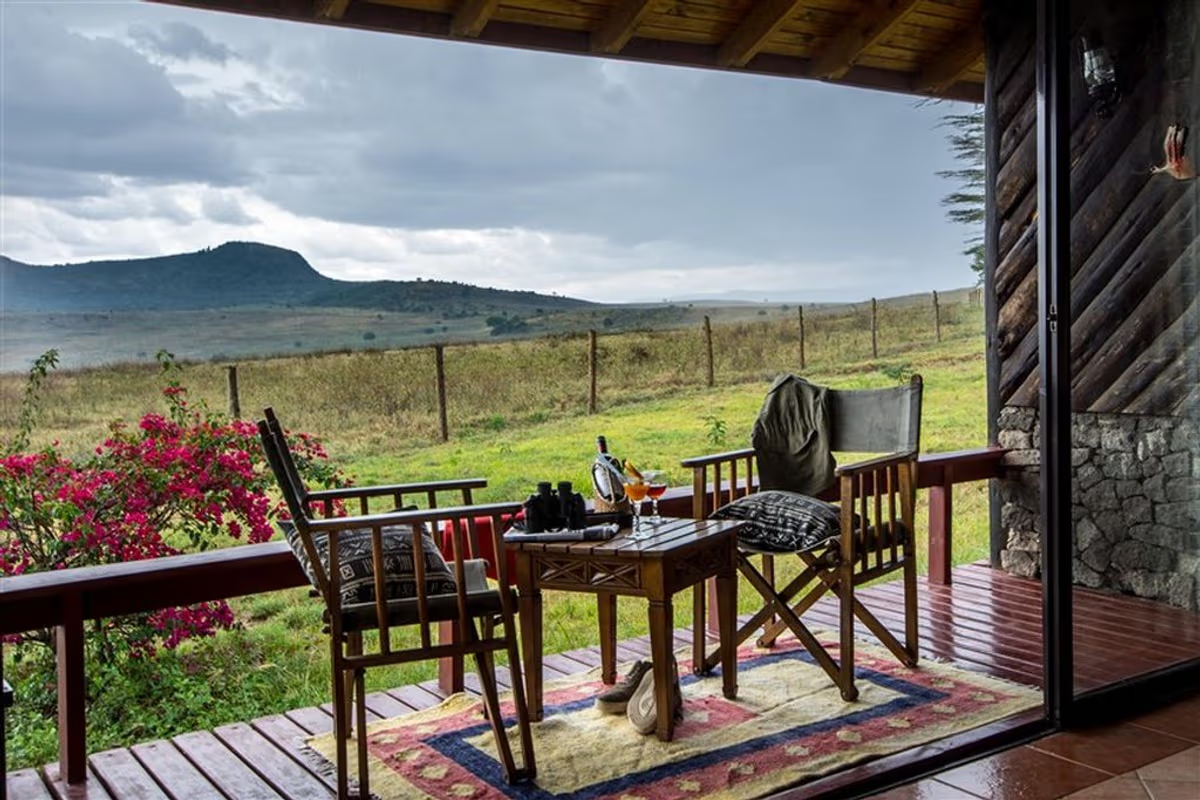
Lake Nakuru Lodge overlooking the surrounding savannah

Lake Nakuru Lodge

Destination

Lake Nakuru National Park

Best For

Rhino viewing and convenient access to Lake Nakuru National Park
Sarova Lion Hill Game Lodge at sunset with elephants nearby

Sarova Lion Hill Game Lodge

Destination

Lake Nakuru National Park

Best For

Comfortable stays combining rhino, birdlife and general game viewing

How to Plan a Complete Kenya Big Five Safari

The best way to plan a Big Five safari in Kenya is not to start by counting how many parks you can fit into your trip. Start with the animal you most want to see, then build the route around it. For most first-time visitors, the Masai Mara is the natural starting point. It gives you some of Kenya’s best chances of seeing lions, leopards and cheetahs, while elephants and buffalo are also regularly encountered across the reserve.

The next question is whether seeing rhino is important to you. If you want to add rhino without making a major detour, Lake Nakuru National Park fits neatly into a road safari. It works particularly well between Nairobi and the Mara. If rhino is one of the main reasons for your safari, however, Ol Pejeta Conservancy is worth building the itinerary around. You get excellent wildlife viewing alongside a stronger conservation experience, making it more than simply another stop on the route. There is also a good reason to consider Tsavo West National Park if your journey takes you towards Amboseli or the Kenyan coast. Its expanding rhino sanctuary makes it a particularly interesting choice for travellers who want to include rhino while exploring southern Kenya.

For a comfortable safari, 7 to 10 days gives you enough time to enjoy the Masai Mara and add another major wildlife destination without rushing from one park to the next. You can certainly do a Big Five safari in fewer days, but the more you try to squeeze into a short trip, the more time you lose on the road. A good safari should leave you with time to stop when something interesting appears, follow wildlife for a while, enjoy your lodge and simply take in the landscape. It is better to explore two well-chosen wildlife areas properly than spend your entire week moving between parks just to add more names to the itinerary.

Traveller PriorityRecommended RouteWhy It Works
Efficient first Big Five safari Masai Mara + Lake Nakuru Combines excellent general game viewing with stronger rhino opportunities
Best rhino-focused experience Masai Mara + Ol Pejeta Strong predator country plus an important rhino conservation destination
Elephants and classic landscapes Amboseli + Masai Mara + rhino stop Adds Amboseli’s elephant experience to a broader Big Five route
Predator-focused safari Masai Mara + private conservancy Excellent lion country with additional opportunities for leopard-focused drives
Longer, varied Kenya safari Samburu + Ol Pejeta + Masai Mara Contrasting ecosystems, wildlife and strong overall species diversity

Kenya Big Five Safari FAQs

Can you see all of the Big Five in Kenya?

Yes. Kenya supports lion, leopard, elephant, buffalo and both black and white rhinos. However, seeing all five on one trip is never guaranteed. Choosing complementary destinations significantly improves the chances.

Black rhinos occur in the Mara ecosystem, but sightings are uncommon compared with destinations specifically managed for rhino conservation. Travellers strongly prioritising rhino should consider adding Ol Pejeta Conservancy or Lake Nakuru National Park.

Ol Pejeta Conservancy is one of Kenya’s strongest rhino destinations and offers an important conservation-focused experience. Lake Nakuru National Park is another excellent option and can fit particularly conveniently into a Masai Mara and Rift Valley itinerary.

Leopard is often the most unpredictable because of its solitary behaviour, camouflage and preference for cover. Rhino can also be difficult outside specific conservation areas, although choosing Ol Pejeta or Lake Nakuru greatly improves the planning side of the challenge.

Seven to ten days is a strong starting point for combining the Masai Mara with a dedicated rhino destination without rushing. Longer itineraries can add Amboseli, Samburu or Tsavo for greater landscape and wildlife variety.

//
Our customer support team is here to answer your questions. Ask us anything!
👋 Hi, how can I help?
Scroll to Top