
Kenya vs Tanzania for Wildlife and Big Cats
Kenya and the Masai Mara
If your safari is short and seeing big cats is high on your list, the Masai Mara is hard to overlook. The Mara supports strong populations of lions, cheetahs and leopards, and its relatively compact wildlife areas can make game viewing feel remarkably concentrated. You are not guaranteed to find a predator on every drive, of course, but the landscape holds established lion prides, leopard territories and cheetah areas that experienced guides know well. The choice becomes even more interesting when you stay in one of the private conservancies around the Mara. With fewer vehicles in many areas, along with opportunities for guided walks and night drives, a conservancy safari can feel very different from a stay inside the main reserve. You also have more flexibility in how you spend your time in the bush. For a traveller with only a few nights, that combination of strong wildlife and relatively compact game-viewing areas can make Kenya an excellent choice.
Tanzania and the Serengeti
Tanzania gives you many of the same big cats, but the feeling of the safari changes because of the sheer size of the Serengeti. You can spend hours on a game drive and still be travelling through the same enormous ecosystem. Around Seronera in the Central Serengeti, lion, cheetah and leopard sightings can be excellent, while the southern plains become especially important during the calving season. Farther north, the landscape takes on another character as the migration moves towards the Mara River. This is why time matters so much in the Serengeti. Three nights can give you a rewarding safari, but a longer stay allows you to move between different parts of the ecosystem and see how the wildlife changes with the landscape and season. In simple terms, Kenya can feel more concentrated, while Tanzania gives you a greater sense of scale. Both can deliver exceptional big-cat encounters.
Masai Mara vs Serengeti for the Great Migration
When it comes to the Great Migration, it is better to think of the Serengeti and Masai Mara as parts of one ecosystem rather than two completely separate destinations.
January to March in Tanzania
If your main interest is the calving season, Tanzania is the place to be. Large herds gather across the southern Serengeti and the wider Ndutu area, bringing thousands of newborn wildebeest calves into the plains. With so many young animals around, predators are never far from the story. Lions, cheetahs and other predators take advantage of the abundance of vulnerable young animals. The Masai Mara still has resident wildlife at this time, including its own lions, leopards, cheetahs and large herds of plains game, but the main migration is concentrated in Tanzania.
May to July in the Serengeti
As the herds leave the southern plains, the migration gradually moves west and north through the Serengeti. The Western Corridor and the Grumeti area become important parts of the journey, while central and northern areas start to see increasing numbers of migrating animals. By June and July, the herds are moving towards the northern Serengeti and the wider Mara ecosystem. This is why the migration cannot really be reduced to a simple July-to-October season. The famous river crossings are only one part of a much longer annual movement.
July to October in the Northern Serengeti and Masai Mara
This is the period when Kenya and Tanzania become most closely connected in the migration story. Large herds move through the northern Serengeti and into the Masai Mara ecosystem, with dramatic river crossings possible on both sides of the border. The exact timing is never fixed. Rainfall and local conditions influence the movement, and the herds can cross, turn back and cross again. If river crossings are your main goal, give yourself several nights in the right area rather than choosing a single date and expecting the migration to follow a calendar.

Kenya vs Tanzania for Landscapes and Safari Scenery
Kenya gives you a remarkable amount of landscape variety within a relatively compact country. The Masai Mara brings rolling grasslands and open savannah. The Rift Valley introduces lakes, escarpments and highland scenery, while Samburu and Laikipia take you into much drier and more rugged country. You can then continue towards the Indian Ocean and finish your safari beside the coast. Tanzania has a different rhythm. The northern circuit gives you a long succession of open plains, acacia woodland, volcanic landscapes and highland scenery. Ngorongoro adds another dramatic change, with the road climbing into the highlands before dropping into the crater and its dense concentration of wildlife. Beyond the northern circuit, places such as Ruaha and Nyerere bring a very different side of Tanzania, while Zanzibar gives you the option of ending the safari on the Indian Ocean. So I would not say one country has better scenery. Kenya gives you faster changes between different landscapes, while Tanzania gives you a stronger feeling of space, particularly across the Serengeti.
Kenya Conservancies vs Tanzania National Parks and Concessions
This is an important difference when choosing where to stay because your accommodation can influence how you experience the bush. Around the Masai Mara, private conservancies have become an important part of the safari landscape. Many limit the number of vehicles and provide a quieter setting away from the busiest parts of the main reserve. Depending on the conservancy and camp, you can also have access to activities such as guided walks and night drives that are not part of a standard safari inside the national reserve.
Tanzania works differently. The country combines national parks with concessions, private areas and other forms of managed wildlife land, each with its own rules. Inside the Serengeti, normal game viewing follows park regulations, so activities such as night drives and walking are generally not part of the standard national-park experience. A private concession or different type of safari property can offer a different set of options. So the real choice is not simply Kenya versus Tanzania. Think about the type of safari you want. If you want a more private setting, fewer vehicles, walking and night drives, a Kenyan conservancy can be a very good fit. If you want enormous landscapes, long game drives and the chance to follow the migration across different parts of one vast ecosystem, Tanzania and the Serengeti offer something very special.
Recommendend Tanzania Trips 2026 – 2027

4 Days Budget Serengeti and Ngorongoro Safari
An affordable short safari combining Serengeti game drives with wildlife viewing inside the Ngorongoro Crater.

5 Days Tanzania Safari: Serengeti and Ngorongoro
Explore the Serengeti’s extensive plains before descending into the Ngorongoro Crater for concentrated wildlife viewing.

5 Days Tanzania Great Migration Safari
A migration-focused Serengeti safari designed around seasonal wildebeest movements, predator sightings and river crossings.

7 Days Tanzania Migration Safari and Serengeti Tour
Spend more time following the Great Migration while exploring the Serengeti’s wildlife-rich plains and rocky kopjes.

8 Days Tanzania Classic Wildlife Safari
A classic northern Tanzania itinerary featuring varied landscapes, productive game drives and Tarangire’s elephant herds.

10 Days Classic Tanzania Wildlife Safari
A comprehensive Tanzania safari offering additional time to experience the northern circuit’s wildlife and contrasting landscapes.
Kenya vs Tanzania Safari Activities
Night Game Drives
If seeing wildlife after dark is high on your list, Kenya has a clear advantage, particularly in the private conservancies around the Masai Mara and Laikipia. Once the sun goes down, the bush takes on a completely different character. Hyenas become more active, leopards start moving through the darkness, and smaller nocturnal animals appear that you would rarely see during a normal daytime game drive. It gives you a chance to see how the bush changes after sunset rather than simply extending the same daytime safari into the evening. Night drives are not available at every camp, so check the specific conservancy and accommodation before booking. Tanzania is different. In Serengeti National Park, night driving is restricted between 7 pm and 6 am, so if your safari is focused mainly on the Serengeti, daytime game drives will remain the main way to see the wildlife.
Walking Safaris
Both Kenya and Tanzania offer walking safaris, but they shine in different parts of each country. In Kenya, the private conservancies around the Masai Mara and Laikipia are excellent places to get out of the vehicle and walk through the bush with a guide. You can slow the safari down, look at tracks and smaller wildlife, and understand the landscape from ground level. In Tanzania, walking becomes particularly interesting in the southern parks. Ruaha and Nyerere are strong choices if you want walking to be an important part of the safari rather than something added for a few hours. So the better comparison is not simply Kenya versus Tanzania. Think of it as a Mara or Laikipia conservancy safari versus a southern Tanzania wilderness safari.
Boat Safaris
Boats are not what most travellers think of when they picture a Kenya or Tanzania safari, but they can add another dimension to the trip. In Kenya, some of the Rift Valley lakes offer opportunities for boat trips, particularly for birding and lakeside wildlife. Tanzania takes the river experience further in Nyerere National Park. The Rufiji River and its surrounding waterways are a major part of the safari landscape, giving you a chance to see wildlife from the water as well as on game drives and walking safaris. If you want one safari that combines game drives, walking and a river experience, southern Tanzania is particularly appealing.
Hot Air Balloon Safaris
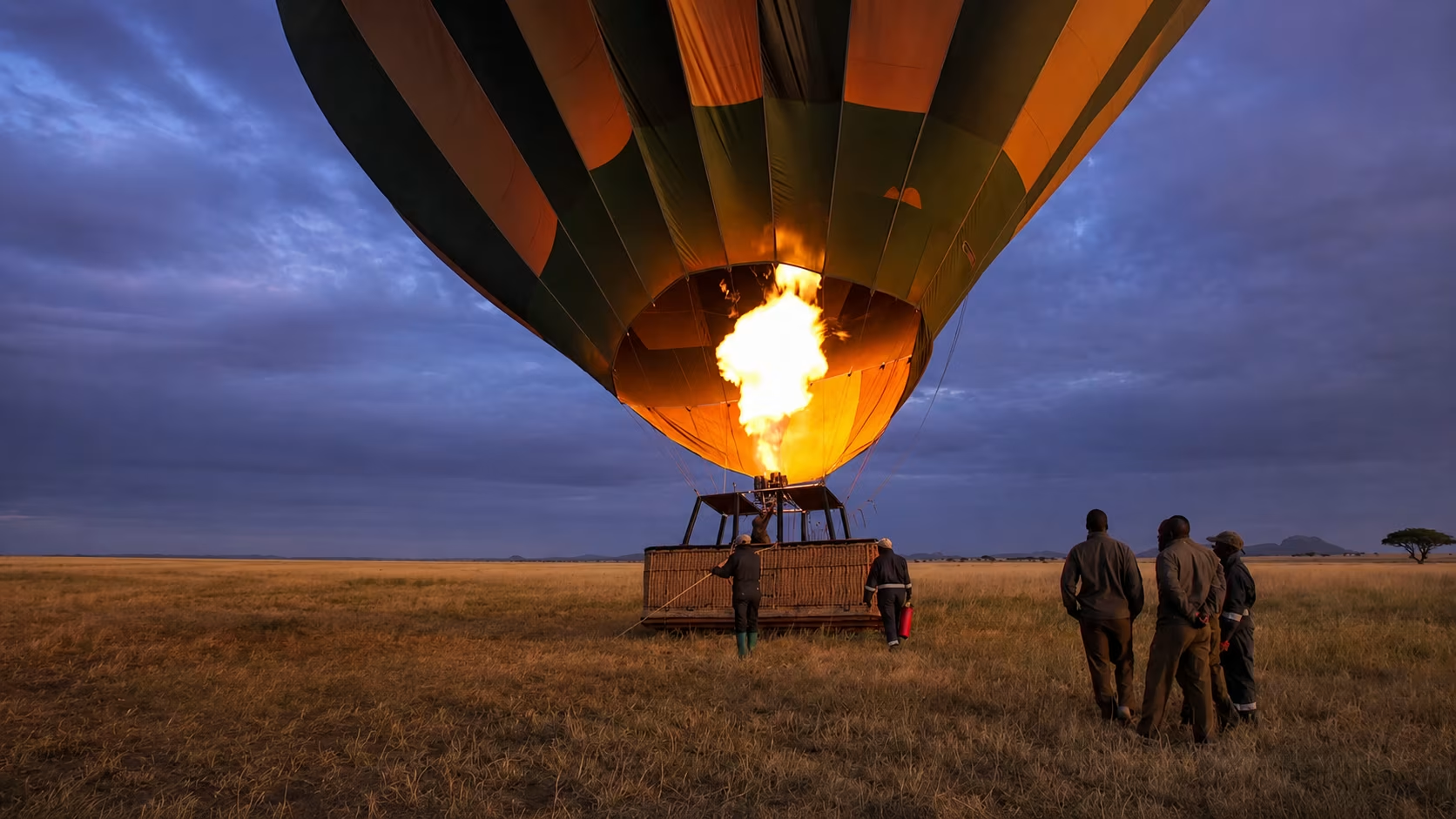
You do not need to choose between Kenya and Tanzania simply because of balloon safaris. Both the Masai Mara and Serengeti offer the experience. The better choice depends on where you are travelling and what you want to see below you. A balloon flight over the Mara gives you a beautiful view of its rolling plains, river systems and surrounding conservancies. In the Serengeti, the huge open plains create a completely different sense of scale. If you are visiting both countries, I would choose the balloon flight based on where it fits best into your safari rather than paying for the experience twice.
Cultural Experiences
Maasai culture is found on both sides of the Kenya-Tanzania border, so culture alone does not make one country automatically better than the other. What matters more is how the visit is arranged and how closely it connects you with the local community. In Kenya, community conservancies can give cultural visits a strong connection to local land ownership, tourism and wildlife conservation. In Tanzania, the Ngorongoro Conservation Area gives you a different perspective, with pastoral communities living within a wider landscape shared with wildlife. Tanzania also gives you another cultural dimension if you continue beyond the safari. Stone Town and the Swahili coast bring history, architecture, food and coastal culture into the same holiday.
Kenya vs Tanzania Safari Costs
There is no simple rule that Kenya is cheaper or Tanzania is more expensive. Safari prices depend on the type of accommodation, number of nights, transport, park and conservancy fees, whether you use a private or shared vehicle, and how much you move between destinations.
Budget Safaris
Both countries work well for travellers looking for a more affordable safari. In Kenya, Nairobi has plenty of safari operators offering shared trips to the Masai Mara and other parks. In Tanzania, Arusha is the main starting point for budget safaris through the northern circuit. At this level, the biggest savings usually come from sharing the vehicle, choosing simpler accommodation, travelling on fixed departures and keeping the itinerary compact. Do not look at park fees alone when comparing prices. Accommodation and transport can make just as much difference to the final cost.
Mid-Range Safaris
This is where comparing Kenya and Tanzania purely on price becomes much harder. A Kenya safari that includes a private conservancy can carry additional conservancy fees, while a Tanzania itinerary covering places such as Serengeti and Ngorongoro comes with its own conservation and access charges. Add the number of nights, vehicle arrangements, accommodation standard and any domestic flights, and the final price can change considerably. For a similar level of comfort and service, Kenya and Tanzania can end up costing broadly the same. The important thing is to compare the complete itinerary rather than the advertised daily rate.
Luxury Safaris
At the luxury end, the country itself tells you very little about what you will pay. Kenya has outstanding high-end camps in the Masai Mara and Laikipia, while Tanzania offers luxury properties across the Serengeti, Ngorongoro and southern wilderness areas. Private vehicles, private guides, camp location, season and how close you are to the wildlife can have a much bigger effect on the price than the country name. When comparing luxury safaris, compare like with like. Look at the accommodation, vehicle, guide, location, meals, included activities and transfers before deciding which one offers better value.
Kenya vs Tanzania Safari Infrastructure and Travel Logistics
Kenya is particularly convenient for travellers building a classic road-based safari. Nairobi is the main gateway, and several major wildlife destinations can be reached by road or connected by light aircraft. Wilson Airport also makes it easy to move between Nairobi and many safari areas. Tanzania’s northern circuit follows a similar pattern, with Arusha serving as the main starting point for Tarangire, Lake Manyara, Ngorongoro and the Serengeti. The main difference is the scale of the distances involved. The Serengeti is enormous, and travelling between some wildlife areas by road can take a substantial part of the day. Once your itinerary covers several distant regions, domestic flights become a very useful way to save time. Both countries have well-established safari flight networks, so flying between parks is a practical option when you want to spend more time on safari and less time on long road transfers.
Travelling Between the Masai Mara and Serengeti
Crossing directly from the Masai Mara into the Serengeti is possible, but it is not as simple as boarding a nonstop light aircraft. The usual connection involves flying from the Masai Mara to Migori in Kenya, continuing by road across the border, completing immigration procedures, and then travelling onward to Tarime in Tanzania, where you connect to another flight into the Serengeti. Some services can make this a same-day journey, which is still far more efficient than travelling all the way back through Nairobi or Arusha. The important thing when planning this connection is to allow enough time for the road transfer and border formalities. Treat it as a combined air-and-road border connection, not a direct Mara-to-Serengeti flight.
Kenya Coast vs Zanzibar After Safari
Both are excellent ways to finish an East African safari, but they suit slightly different travel plans.
Kenya Coast
The Kenya coast works particularly well after a southern Kenya safari. If you have been to Amboseli or Tsavo, you can continue towards the coast without having to return to Nairobi first. Diani is a popular choice for travellers looking for a relaxed beach stay, with good resorts, swimming and a range of water activities. For someone who wants safari first and an easy beach finish afterwards, the Kenya coast has a very practical advantage.
Zanzibar
Zanzibar fits naturally into a Tanzania itinerary, although you will normally need to fly from the safari region or connect through Arusha or Kilimanjaro. The extra flight is not necessarily a disadvantage because Zanzibar offers much more than simply a place to sit on the beach. You can spend time in Stone Town, head to the beaches of the north or east coast, go snorkelling or diving, and enjoy a completely different side of East Africa after several days in the bush. So rather than saying one is simply more spectacular, choose according to the journey you want. Choose the Kenya coast when you want a convenient beach finish after a southern Kenya safari. Choose Zanzibar when the island itself is an important part of the holiday and you want to combine safari with beaches, Swahili culture and island activities.

Mahali Mzuri
Private conservancies surrounding the national reserve. Night drives, off-road access and low vehicle density.
Singita Grumeti
Mix of park concession camps and reserve-adjacent camps. Direct park access, with some walking and night-drive concessions.

&Beyond Crater Lodge
Crater rim lodges and Karatu-area properties. Early crater descent advantage from rim lodges.

Saruni Samburu
Laikipia and Samburu private conservancies. Night drives, walking, rhino tracking and low visitor numbers.

Jongomero
Remote bush camps in Ruaha and Selous. Walking safaris, boat safaris and genuine wilderness remoteness.
Popular kenya Safaris 2026/27

3 Days Amboseli Budget Safari
A short budget safari featuring Amboseli National Park, its open landscapes, elephant herds and views of Mount Kilimanjaro.

3 Days Masai Mara Budget Safari
A compact Masai Mara safari offering savannah game drives, predator viewing and seasonal Great Migration experiences.

4 Days Lake Nakuru and Masai Mara Safari
A short multi-park itinerary combining Lake Nakuru’s rhinos and birdlife with the wildlife-rich plains of the Masai Mara.

4 Days Tsavo East and Tsavo West Safari
Explore both Tsavo parks for expansive wilderness scenery, red elephants and a convenient safari route towards Kenya’s coast.

6 Days Masai Mara and Amboseli Safari
Combine the Masai Mara’s wildlife-rich plains with Amboseli’s elephant herds and Mount Kilimanjaro scenery.

8 Days Magical Kenya Safari from Nairobi
A longer Kenya itinerary from Nairobi designed for travellers who want more time across the country’s varied safari landscapes.


